The tech industry is known for being stressful, with extended hours and high pressure. The Covid crisis has not helped improve an already tricky situation, and today, the entire industry pays the price of poor company culture and lack of proper mental health support.
The tech industry is definitely in the top 5 sectors with the highest rate of mental health issues. Even before COVID, a 2019 BIMA report showed that in the UK, a tech worker is 5 times more depressed than the average worker!
Other statistics are not much better:


We’ve addressed this topic in several previous posts. Neglecting mental health in the workplace is never just neglecting mental health; it is also failing to look after the company’s health.
In its 2024 report on Mind Health, Axa shows how it translates in the day-to-day of the office:


In 2024, in the UK, 33.7 million days of work were lost due to poor health, such as anxiety, stress, and depression. For these reasons, each person took, on average, 21.1 days off work in the year.
In 2023 only, AXA UK calculated a loss of £28bn attributed to burnout and mental health-related issues.These astonishing numbers are for all industries and not for the tech industry only, but given the numbers we saw above about the high rate of mental illnesses in tech workers, it is easy to extrapolate that the cost for tech companies is enormous.
Despite such data, many employers still do not adequately care for their employees’ mental health.
In the US in 2022, a study by Mental Health America found that 55% of adults with mental illness did not receive any treatment due to:
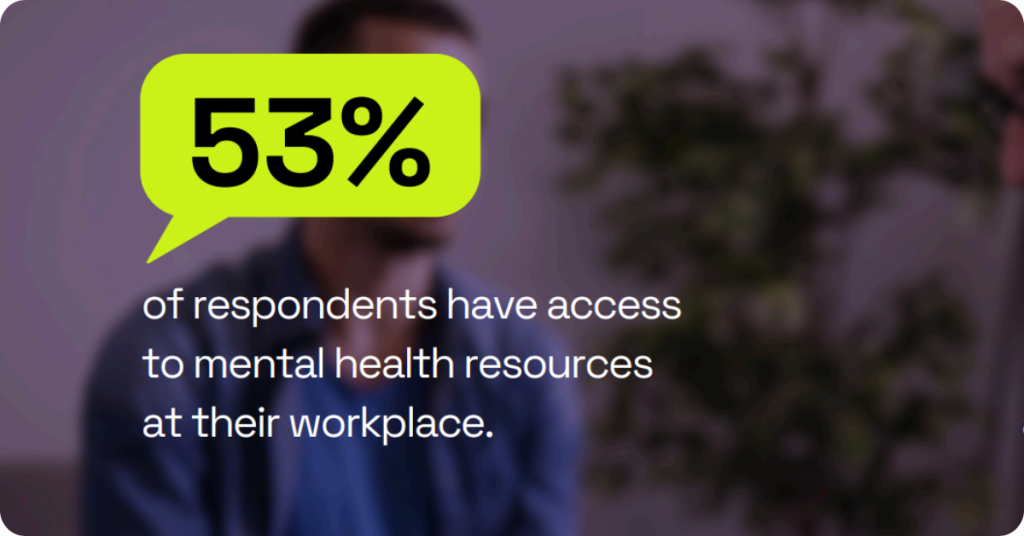
Fighting stigma and making mental health support more accessible are urgent initiatives, regardless of the industry. However, we note that companies are increasingly offering resources in that area. Up to 60% of companies now offer some “well-being” support, yet, for 58% of them, the satisfaction level of employees with the offering is low. Some of the employees do not even know about them or how to use them.
Beyond the apparent barriers, such as access and poor company culture, the problem seems to reside in the fact that while the support exists, it is poorly presented and/or promoted on onboarding and throughout the employee journey. The tools exist, it is about encouraging everyone to use them properly.
The tech industry is going through changes with artificial intelligence advancements impacting productivity and innovation.
More than ever, it is time for an industry that has always been known for its stressful environment to not only put in place efficient tools to support its employees but to guide them through the process correctly.
Related:
Tehnoloogiasektor seisab silmitsi “täiusliku tormiga”, mida iseloomustavad kõrgsurvega tarneperioodid (sprintid), pidev ühenduvus ja tehisintellekti kiire arengutempo. Seda raskendab ajalooline kangelastegude kultuur, pikad tööpäevad ja neurodiversiteedi kõrgem kui keskmine määr, mis nõuab rohkem nüansirikkamat, isikupärastatud tuge kui traditsiooniline ettevõtluskeskkond sageli pakub.
Saate oma sisemisi kulusid hinnata, vaadates kolme hooba: Puudumine (kaotatud päevad), Presenteeism (kaotatud tootlikkus töötamise ajal) ja Asenduskulud. Tehnoloogia valdkonnas võib spetsialiseeritud arendaja asendamine maksta kuni 150-200% nende aastapalgast, kui arvestada värbamise ja sisseelamise kuludega.
“Heaolu lõhe” tekib tavaliselt seetõttu, et tööriistad on “külge poogitud” selle asemel, et neid integreerida. Kui ettevõte pakub meditatsiooniäppi, kuid säilitab kesköiste e-kirjade ja kõrge stressiga tähtaegade kultuuri, näevad töötajad seda tööriista kui “plaastrit.” Tõeline rahulolu saabub siis, kui tuge propageeritakse sisseelamisprotsessi ajal ja see on juhtkonna poolt eeskujuks.
Jah. Hiljutised andmed näitavad, et 34% tehnoloogia töötajatest väidavad selgesõnaliselt, et nende otsust jääda ettevõttesse mõjutab vaimse tervise ressursside kvaliteet. Kättesaadava ja stigmatavaba toe pakkumine ei ole enam lisahüve; see on tippklassi inseneritalendi säilitamise põhistrateegia.
Autori kohta

Konsulteeriv psühholoog Siffis
Anastassia on psühholoog, kes on spetsialiseerunud nõustamispsühholoogiale, töökeskkonna heaolule ja grupifasiliteerimisele. Ta arendab organisatsioonidele vaimse tervise strateegiaid ja tööriistu, kujundab ja viib läbi koolitusi ning aitab meeskondadel luua tervislikumaid ja toetavamaid töökeskkondi.
Viimased postitused